

Why this time is different
The patient who books a medical weight loss visit has usually already done the obvious. Cleaner eating. More movement. Better sleep when life allows. The needle barely moves, and what comes off comes back. By the time most adults arrive, they suspect, correctly, that the resistance is metabolic, not motivational.
Our job is to find out which of several common drivers is actually in the way: thyroid that’s quietly slow, insulin resistance, hormone shifts in perimenopause or andropause, cortisol pattern that won’t let fat come off, inflammation, or a leptin set point that needs a reset. The panel tells us which.
What we evaluate before prescribing anything
Most clinics that offer GLP-1 medication start prescribing on a brief intake. We don’t. Your evaluation can cover:*
- Thyroid: TSH, free T3, free T4, reverse T3, antibodies.
- Insulin, fasting glucose, HbA1c. Insulin resistance is one of the most-common reasons weight stays stuck.
- Sex hormones: estradiol, progesterone, testosterone, SHBG, DHEA-S.
- Cortisol and adrenal pattern.
- Inflammatory markers: hs-CRP, ferritin, and others as indicated.
- Nutrient status: vitamin D, B12, iron, magnesium.
- Lipid panel and CMP for baseline safety.
* Not every marker is run for every patient. Some tests are ordered at your doctor’s discretion, and tests beyond the new patient panel may carry additional fees. Typical new patient labs: CMP, CBC, TSH, ferritin, FSH/LH, testosterone, SHBG, estradiol, progesterone, and PSA (men).
If a GLP-1 is the right tool after the panel, you’ll be on one. If thyroid optimization or a hormone reset will unlock the work first, that’s where we start. Most patients get both.
The treatment toolbox, in plain language
GLP-1 therapy (semaglutide, tirzepatide)
The most-effective pharmacological tool we have for sustained weight loss. GLP-1 medications mimic the body’s own incretin hormones to slow gastric emptying, improve insulin sensitivity, and reset leptin signaling so the “always hungry” signal quiets down. We prescribe and titrate them carefully, manage nausea and other side effects through dosing and supportive protocols, and adjust as your labs move. Two membership paths: the base medical weight loss program at $129 per month with medication priced separately, or a bundled GLP-1 membership at $239 per month that includes tirzepatide up to 5 mg.
Hormone optimization to make the rest of the work hold
For most patients over 35, hormone shifts are part of why weight stopped responding. Estrogen and progesterone affect insulin sensitivity. Testosterone in both men and women preserves muscle through a weight-loss phase. Thyroid sets the metabolic floor. We optimize what the panel shows is off, in parallel with GLP-1 or in place of it depending on the picture.
Cortisol regulation
Chronically high cortisol drives belly fat storage and sugar cravings. If your cortisol pattern is the bottleneck, no GLP-1 dose makes that go away. We address it directly with lifestyle work, targeted supplementation, and where indicated, sleep evaluation and stress-management referral.
Nutritional and metabolic support
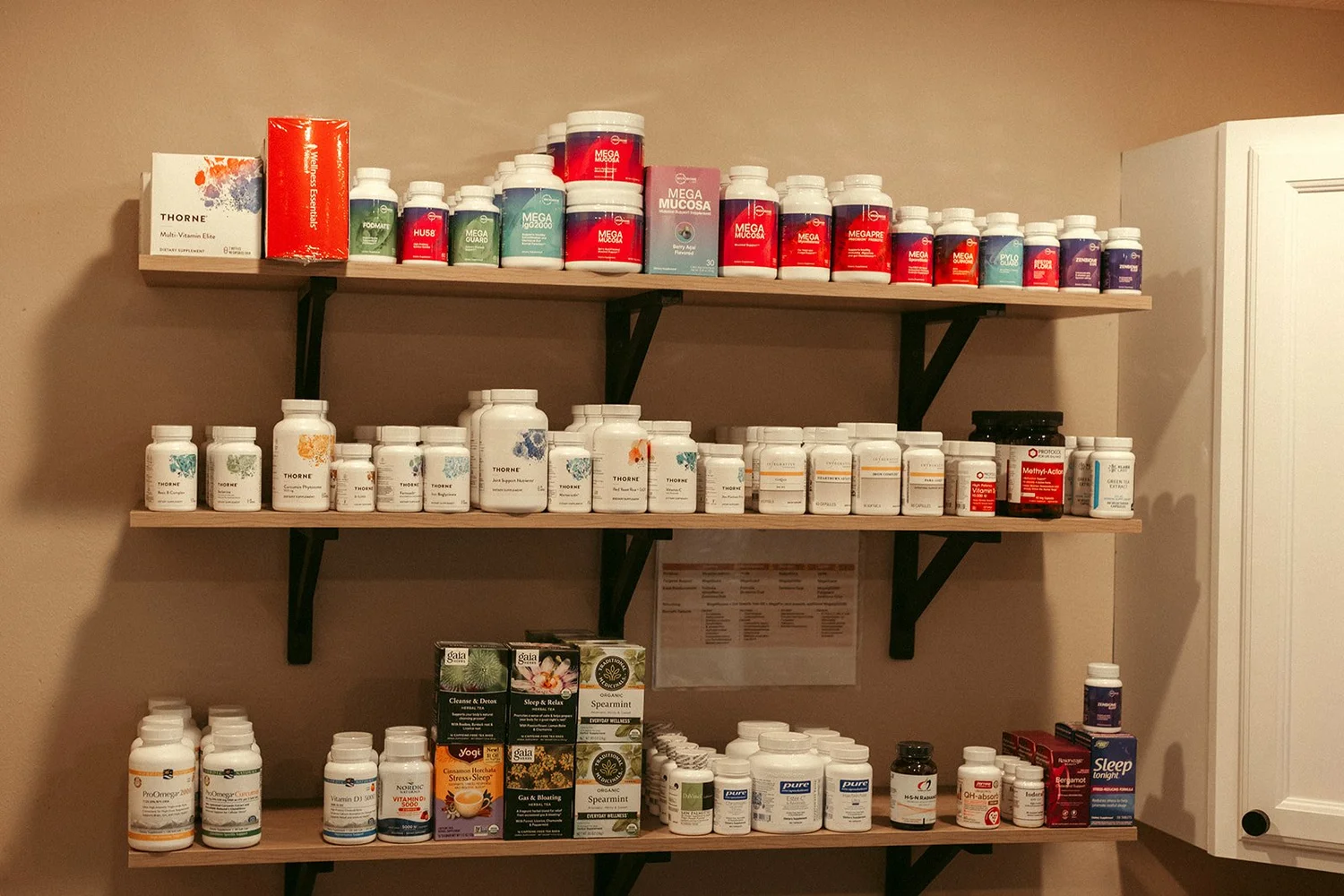
Evidence-based supplements, often including omega-3s, berberine, chromium, myo-inositol, and vitamin D, can support metabolic function and help the medications work better. We recommend based on your panel, not on a one-size protocol.
Emsculpt Neo for body composition
An FDA-cleared modality that uses HIFEM and radiofrequency to build muscle while reducing fat in targeted areas. Useful as an adjunct in the maintenance phase after GLP-1 has done the systemic work, particularly for abdomen, glutes, arms, and legs. Not a standalone weight loss tool. Available for established patients.
IV nutrient therapy
For patients who need targeted nutrient repletion during a weight loss phase, or who are addressing fatigue and recovery alongside the metabolic work. Custom formulations including NAD+, glutathione, methylene blue, and iron when indicated.
The first three months, expectations set honestly
Most patients on the right protocol see 1 to 2 pounds of fat loss per week, depending on starting weight and which mechanisms are in play. The early weeks are dose titration and side-effect management. By month two and three, weight is moving consistently and the body composition shift is visible. We aim for 15 to 20% of body weight or more across the program for patients who are good candidates, but the number that matters is yours.
What we will not do
We will not prescribe GLP-1 medications without a panel first. We will not run a weight loss program that ignores your hormones, your thyroid, your cortisol, or your sleep. We will not turn this into a forever subscription if your body can hold its results without it. And we will not bill insurance, which won’t cover physiologic dose hormone work, the panel, or the consult time required. HSA and FSA dollars apply, and we provide superbills.
Frequently asked
Am I a candidate for GLP-1 therapy?
Most adults who have struggled with weight loss despite consistent effort are candidates. The right question is whether GLP-1 is the right tool for your specific picture. That’s what the panel and consultation determine.
What results can I expect and how quickly?
Most patients begin seeing changes within 2 to 4 weeks of starting on the right protocol. Significant weight loss typically occurs across 4 to 6 months, often 1 to 2 pounds per week. Total loss varies widely by starting point and which underlying drivers are in play.
What are the side effects and how are they managed?
The most common GLP-1 side effects are mild to moderate nausea, particularly when starting or increasing the dose. We manage these through careful titration, supportive protocols, hydration and nutrient strategy, and dose adjustments. Most patients tolerate the medications well after the first few weeks.
How is this different from other weight loss programs?
Most weight loss clinics start prescribing on a brief intake. Our work starts with a full hormone, metabolic, thyroid, and inflammatory panel and treats the root cause, not just the symptom. We are board-certified naturopathic physicians, not weight loss coaches.
What happens if I want to stop the medication?
The goal is to optimize your metabolism and hormones so that you can hold your results without indefinite medication. We work with you on a transitional protocol and on the lifestyle and hormonal supports that maintain the change.